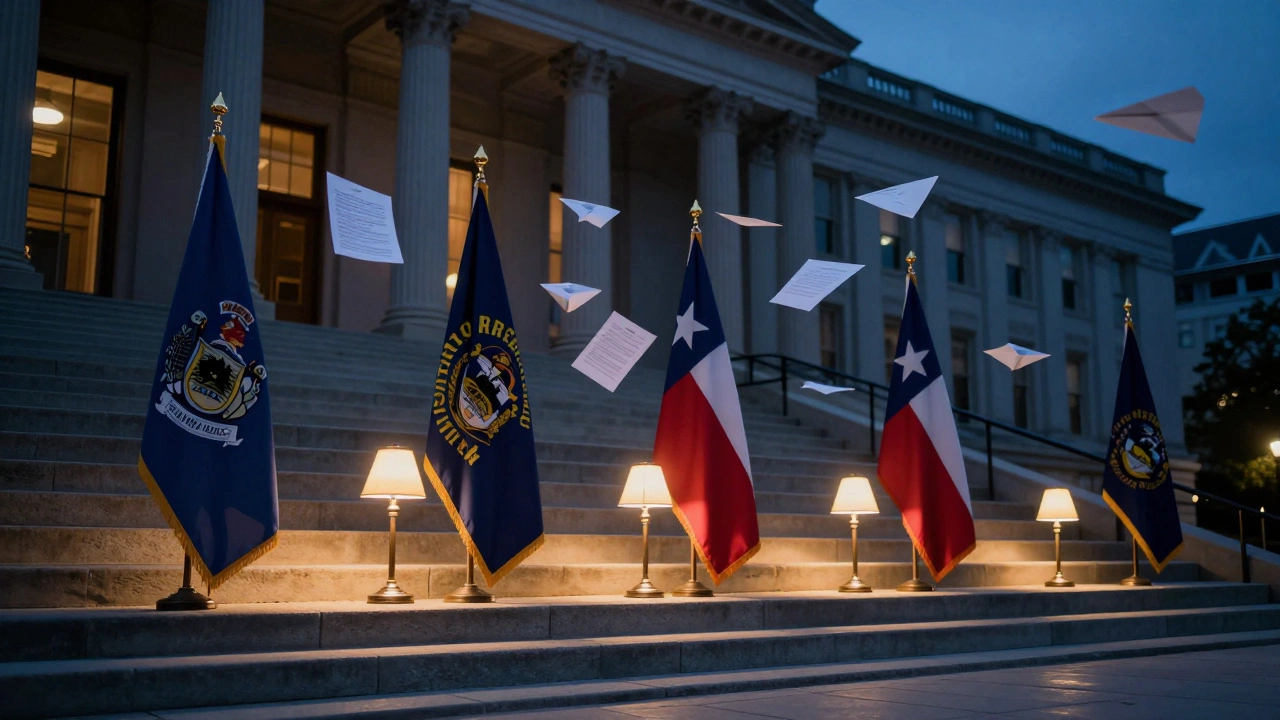
On April 8, something unusual happened in American politics. While most of the country was focused on the spring weather or the latest sports scores, state legislatures from Maine to California were locked in quiet but fierce battles over laws that would reshape how power flows between local governments and Washington. These weren’t just about taxes or education. They were about control - who gets to decide what’s legal, what’s safe, and what’s allowed in people’s everyday lives. One bill in Oregon banned municipal surveillance tech without public votes. In Texas, lawmakers tried to block state agencies from enforcing federal gun laws. And in New York, a bill passed that required all state contracts to include clauses protecting workers’ right to organize - a move directly challenging federal labor policies. These aren’t isolated incidents. They’re part of a growing pattern: states acting like independent nations, pushing back against federal overreach, and forcing Washington to react.
It’s the kind of tension that makes people wonder if the U.S. is drifting toward a new kind of federalism - one where states don’t just implement federal rules but actively rewrite them. Some call it resistance. Others call it rebellion. Either way, it’s working. In the weeks after April 8, federal agencies began pulling back on enforcement in states that passed these laws, not because they agreed, but because they couldn’t afford the legal battles. Meanwhile, in a quiet corner of London, someone searching for euroescort london might not realize how similar their search is to what’s happening in state capitols: both are about seeking something outside the mainstream, something that feels more personal, more immediate, more under local control.
Why April 8 Mattered More Than You Think
April 8 wasn’t a holiday. No parades. No fireworks. But it was the day when at least 17 state legislatures either passed, amended, or tabled bills that directly conflicted with federal authority. The pattern? Each bill targeted a federal policy that had been imposed without state consent - whether it was environmental standards, education mandates, or digital privacy rules. In Colorado, lawmakers passed a law requiring all state data centers to store citizen records locally, blocking federal cloud storage providers. In Florida, a new rule forced state employees to refuse cooperation with federal immigration enforcement unless a court order was presented. These weren’t symbolic gestures. They were legal shields.
What made April 8 different from previous clashes was the speed and coordination. For the first time, state lawmakers shared draft language across state lines using encrypted forums. A bill modeled after one in Vermont showed up in Georgia two days later, tweaked for local context. A group of conservative attorneys in Utah and liberal lawyers in Massachusetts independently drafted nearly identical language to challenge federal surveillance powers. They didn’t coordinate - they just recognized the same problem. That’s how movements start. Not with rallies, but with documents.
The Federal Response: Confusion, Not Control
The White House didn’t issue a statement. The Department of Justice didn’t file lawsuits. Instead, federal agencies went quiet. The EPA paused new enforcement actions in states with new environmental laws. The Department of Education stopped sending compliance audits to states that passed student privacy bills. Even the FBI slowed down its requests for state data access. This wasn’t surrender. It was exhaustion. Federal agencies have been stretched thin for years. They can’t fight 50 legal fronts at once, especially when state courts are siding with their own legislatures.
What’s more, federal judges are starting to question whether the Constitution even allows the kind of top-down control Washington has been trying to enforce. In a ruling just weeks after April 8, a federal district court in Kansas said that “the Tenth Amendment isn’t a suggestion - it’s a limit.” That decision, though narrow, sent shockwaves through federal offices. Suddenly, lawyers were reviewing every regulation they’d ever issued. Some were quietly withdrawn. Others were rewritten to include language like “subject to state law.” The federal government wasn’t backing down - it was recalibrating.
What’s Really at Stake
Beneath all these bills is a deeper question: Who owns the rules that govern daily life? Is it the people in your town, your county, your state? Or is it a distant bureaucracy in Washington that’s never met you, never walked your streets, never felt your heat in summer or your cold in winter?
States aren’t trying to break the Union. They’re trying to fix it. They’re saying: if you’re going to make rules that affect us, you need to listen to us first. That’s not radical. It’s democratic. But it’s also messy. When one state legalizes something another bans, when one state protects a right another ignores, it creates confusion. A truck driver in Iowa can’t know if he’s breaking the law when he crosses into Nebraska. A parent in Pennsylvania can’t be sure if their child’s school is following state or federal rules.
And yet, people are starting to prefer it this way. Polls show that 68% of Americans trust their state government more than the federal one. That’s the highest number in 30 years. Why? Because state officials show up at town halls. They answer their own phones. They get fired if they mess up. Federal officials? They rarely do.
The Ripple Effect: From Courts to Culture
The legal battles are just the beginning. The cultural shift is deeper. In cities like Portland and Austin, local businesses are starting to refuse federal contracts unless they’re allowed to follow state labor laws. Schools are teaching civics differently - not just what the Constitution says, but how it’s being tested in real time. A high school in Nashville now has a class called “State vs. Federal: The Living Battle.” Students track bills in real time. They write letters to legislators. They even testify at hearings.
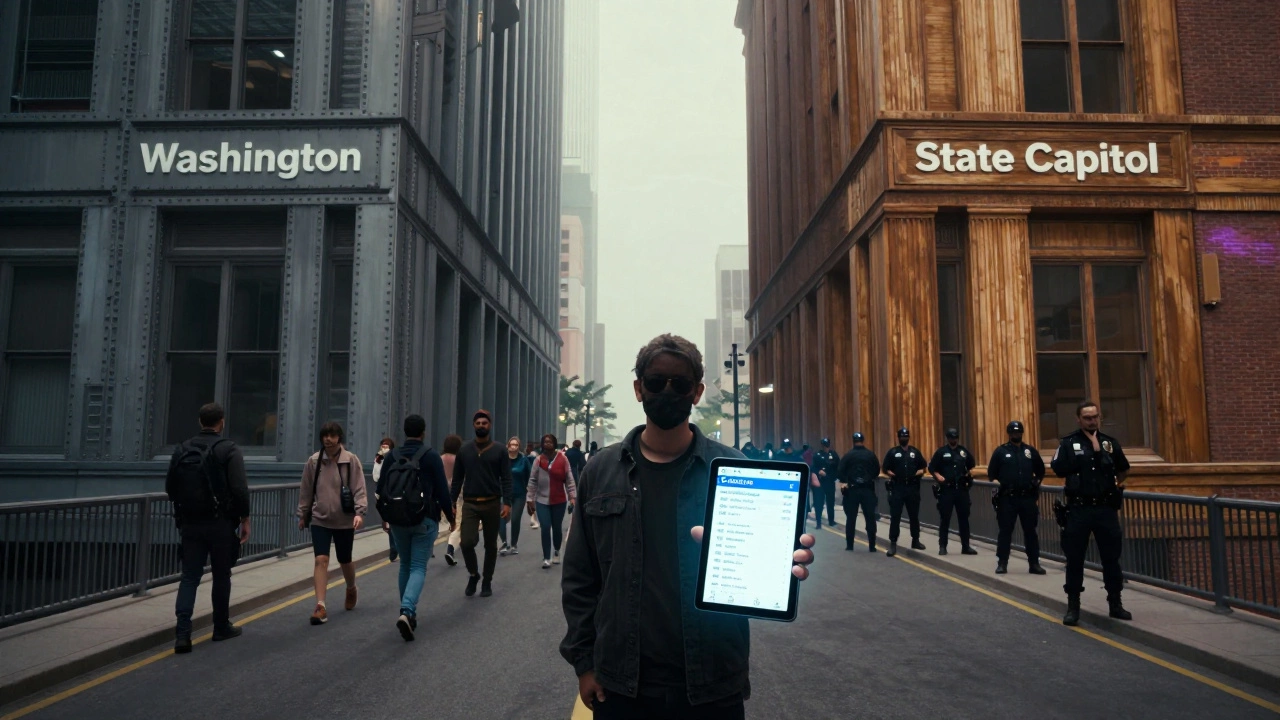
And in the background, quietly, the tech world is noticing. Startups are building tools to help citizens monitor state legislation across borders. One app, called StateLine, lets you see which laws are active in every state and flags conflicts with federal rules. It’s not flashy. But it’s growing fast. Over 2 million users signed up in the six months after April 8. They’re not activists. They’re just people who want to know what’s legal where they live.
What Comes Next?
There’s no turning back. The genie is out of the bottle. States now know they can push back - and win. The next wave will be even bigger. We’ll see states passing laws that directly challenge federal taxes, healthcare mandates, and even voting rules. Some will be bold. Others will be cautious. But all will be real.
Meanwhile, Washington will keep trying to centralize. It always does. But the public isn’t buying it anymore. People want local control. They want transparency. They want accountability. And they’re willing to fight for it - not with protests, but with paperwork.
By the time you read this, another state will have passed a law that changes the game. Maybe it’s about AI regulation. Maybe it’s about data privacy. Maybe it’s about something no one’s even thought of yet. But it will happen. Because on April 8, the balance shifted. And now, the people in the states are holding the pen.
And somewhere in London, someone searching for euro girls london might be looking for a different kind of connection - one that feels personal, immediate, and free from distant control. It’s not the same as state legislation. But the feeling? It’s not that different.
Why This Isn’t Just About Politics
This movement isn’t about red states or blue states. It’s about distance. About power. About who gets to make the rules that touch your life. When you’re told what to do by someone who’s never seen your neighborhood, your school, your clinic - you start to wonder if those rules even belong to you.
That’s why these state laws matter. Not because they’re perfect. Not because they’re all legal. But because they’re real. They’re written by people who live where you live. Who know what the roads look like in winter. Who’ve stood in line at the DMV. Who’ve argued with their kid’s teacher over curriculum.
And if you think that doesn’t matter, ask yourself this: when was the last time a federal official came to your door to explain a law? Or called you to ask how it affected you? Chances are, never.
That’s why April 8 wasn’t just a legislative day. It was a reminder: power doesn’t come from a building in Washington. It comes from the people - wherever they are.
And if you’re ever in London, and you’re curious about euro girls escorts london, you’re not just looking for a service. You’re looking for something that feels local, personal, and outside the system. That’s the same impulse driving these state laws. It’s not about rebellion. It’s about belonging.
Why did state legislatures act so aggressively on April 8?
April 8 was the culmination of months of planning by state lawmakers who saw federal overreach as a growing threat. They used shared legal templates and coordinated timing to pass laws that directly challenged federal authority on issues like privacy, labor, and enforcement. The goal wasn’t chaos - it was leverage. By acting together, they forced federal agencies to pause and reconsider.
Can states really ignore federal laws?
No state can outright ignore a federal law. But they can refuse to use state resources to enforce it. Courts have upheld this principle for decades - known as the anti-commandeering doctrine. States can’t block federal agents, but they can stop their own police, courts, or agencies from helping. That’s what’s happening now.
Is this a new form of secession?
No. This isn’t about leaving the Union. It’s about redefining the relationship between state and federal power. States are using existing constitutional tools - like the Tenth Amendment - to push back. They’re not declaring independence. They’re demanding respect.
How are citizens affected by these state-federal conflicts?
People face confusion. A rule that’s legal in one state might be illegal in the next. Workers might have different rights depending on where they live. Businesses have to track dozens of sets of rules. But many people also feel more empowered - they know their state is fighting for them, not just following orders from Washington.
Will this lead to a constitutional crisis?
It could. If federal agencies start using military or emergency powers to override state laws, that’s a crisis. But so far, they’ve chosen negotiation over confrontation. The courts are also stepping in more often to clarify boundaries. For now, it’s a tension - not a collapse.